Anna Welthagen
and the members of Surgeons for Little Lives
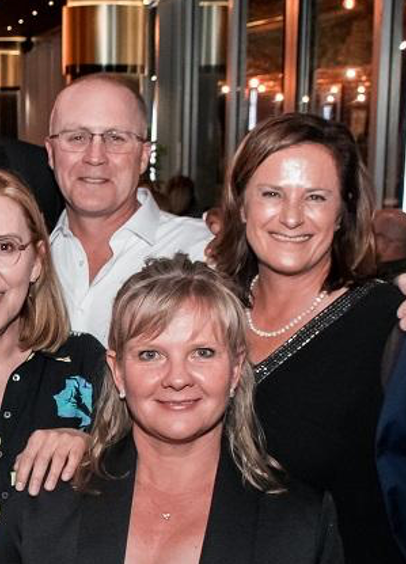
Thumbnail: Anna Welthagen is passionate about improving the lives of young surgical patients and their families in South Africa. In 2012, Welthagen joined Surgeons for Little Lives, an organisation with a powerful commitment to serve the lives of sick children. Despite a demanding schedule and constant challenges, Welthagen is determined to continue her cause for humanity, describing her mission as self-fulfilling.
Profile: In 2012 Anna Welthagen was approached by Jerome Loveland, the chairperson of Surgeons for Little Lives, to work at the nonprofit, which is dedicated to paediatric surgical patients. She took the opportunity and started serving right from the beginning, first as a coordinator and eventually as its Operational Manager—overseeing registration, setting up systems, and establishing the foundation of the charity. Today it is a team effort: “The programmes at Surgeons for Little Lives,” said Welthagen, “were not driven by one individual. The charity’s work is the result of a dedicated Board of 10 committed members who volunteer their personal time. All initiatives and achievements are the outcome of collective teamwork.”
During the past decade, the organisation has implemented several projects in South Africa, including supporting the Paediatric Surgical Outpatient Department at Chris Hani Baragwanath Academic Hospital to manage new non-urgent referrals and follow-up patients. It includes a clinic and a maternal sleep-over unit with laundry and kitchen amenities. Another programme: the Paediatric Burn Unit, with 6 ICU beds, 24 ward beds, and a shared operating theatre, serving Soweto, Gauteng, and northern South Africa. Welthagen and her team provide patients with admission and discharge packs to support children with essential toiletries, clothing, and toys. They also coordinate an art project:
“Art and music play a vital role in uplifting children’s spirits, improving their mood and behavior. Activities such as painting, drawing, collaging, stickers, singing, dancing, and drumming not only bring joy but also support mobility and flexibility, complementing therapies from clinical staff. The Expressive Art Therapist extends this work to outpatients, engaging caregivers and children in using art at home to foster dialogue, expression, and bonding,” said Welthagen.
Welthagen has also partnered with The Department of Paediatric Surgery to launch the Child Abuse and Neglect Program: “Our focus is on tackling child violence and neglect. The programme aims to raise awareness, ensure early detection, provide proper management, and ultimately prevent and protect children from abuse and neglect.” There is also an awareness campaign for young burn victims: “Our focus is on caregivers of children under 5; the programme highlights the risks of burns, prevention strategies, and emergency responses. It emphasises that burns are serious, common, and preventable, with the home identified as the main site of injury. The campaign delivers simple, repetitive messages in local languages through various media to drive behavior change. Two retired matrons support the initiative by visiting community clinics weekly.”
There are many other projects, including improving facilities for patient comfort and care, creating a neonatal waiting room for families of neonatal patients, conducting patient follow-ups to improve accessibility, and implementing a patient information system to ensure accurate data capture for research and care.
For over a decade, Surgeons for Little Lives has helped thousands of children access better care and brighter futures. As Welthagen points out, “We have transformed paediatric healthcare in South Africa by supporting life-saving paediatric surgeries, upgrading hospital facilities, supporting families, and raising awareness about child health issues.”
Relying on donations and corporate partnerships to ensure sustainability, the organisation faces multiple challenges: high patient load, shortage of staff, infrastructure constraints, resource limitations of the public health system, and the management of diverse projects. And the organization’s workers are similarly challenged: “We sacrifice personal time, energy, balancing demanding hospital duties with charity commitments. . . . Paediatric surgeons caring for ‘little lives’ need a balance of technical precision, emotional resilience, teamwork, and strong ethical principles. They must operate with advanced skill, stay calm in emergencies, support anxious families with empathy, and work closely with multidisciplinary teams. Even when facing budget or resource constraints, they prioritise children’s safety, escalate concerns appropriately, seek safe alternatives, and ensure decisions are guided by clinical need. Throughout every challenge, their guiding principle remains simple and unwavering: The well-being of the child always comes first.”
Despite long hours and little recognition, Welthagen remains positive: “The work is deeply fulfilling, and we would not change it. I absolutely see myself continuing with this work. While it demands personal sacrifice and long hours, the impact we make in the lives of children and their families is deeply rewarding. The satisfaction of knowing that our efforts bring hope and healing far outweighs the challenges, and I would not consider quitting.”