
Emmanuel Sitima
From Campus to Confrontation: ZINASU’s Sitima Fights Mnangagwa’s 2030 Push
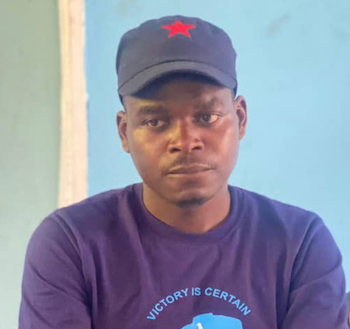
Thumbnail: Emmanuel Sitima, 24, is the defiant face of Zimbabwe’s student resistance, leading ZINASU’s charge against President Mnangagwa’s 2030 ambitions and advocating for constitutional integrity. Sitima’s activism is rooted in a fierce commitment to constitutionalism and youth empowerment.
Profile: Emmanuel Sitima, 24, has become a defiant voice in Zimbabwe’s student movement, leading a charged campaign against President Emmerson Mnangagwa’s bid to extend his term of office beyond 2028. As Secretary General of the Zimbabwe National Students Union (ZINASU), Sitima is rallying youth around constitutional integrity and resistance to what he calls “governance by repression.”
A financial mathematics graduate from the University of Zimbabwe, Sitima first rose to prominence as ZINASU president in early 2024. He also serves as Treasurer General of the Southern African Students Union (SASU), expanding his influence across borders.
“Being a conscious youth at any tertiary institution in Zimbabwe has long been declared a crime post-independence by the regime in Harare,” Sitima said. “So before and after being elected the President of the only genuine student union in Zimbabwe, I was never spared—arrest, oppression, abduction, and torture became routine for any voice of reason.”
In July 2024, Sitima was arrested alongside dozens of students during a ZINASU meeting in Harare. Witnesses say riot police stormed the venue, beating attendees and detaining Sitima at Harare Central Police Station. “Prison became the halls of residence,” he said. “Threats to life and personal security remain the order of the day.”
Despite the risks, Sitima remains resolute. He accuses Mnangagwa’s administration of attempting to subvert the 2013 Constitution through a potential referendum that could extend the president’s term to 2030. “It’s only conviction and a dream for a better Zimbabwe and restoration of meaning to the degrees of all suffering young people in tertiary institutions,” he said. “He can’t extend misery. He can’t continue to cap-degreed vendors.”
Sitima’s critics within the ruling ZANU-PF party dismiss him as a provocateur, but he insists his campaign is rooted in constitutionalism and democratic accountability. “Being a ZINASU leader came with all those challenges mentioned, but it strengthened my resolve,” he said.
His prison experience, he says, was transformative. “It made me understand that we all live in a bigger prison called Zimbabwe,” Sitima said. “I started to understand that our fight as students should extend beyond tuition, bonds and soup struggles in dining halls. We must hammer hard on the national question, because all the challenges we are facing emanate from bad governance.”
Sitima’s leadership style is described as methodical yet empathetic, balancing strategic planning with grassroots mobilization. He mentors younger activists and organizes civic education workshops, while contributing to regional dialogues on student rights and youth participation.
As speculation grows over constitutional amendments, Sitima’s voice remains central in framing the debate. For many students, he represents a break from apathy—a symbol of resistance in an era of shrinking democratic space.
“We are the generation that must choose courage over comfort,” Sitima said. “The Constitution is not a convenience—it’s a covenant.”