Marie-Claire Tshizala
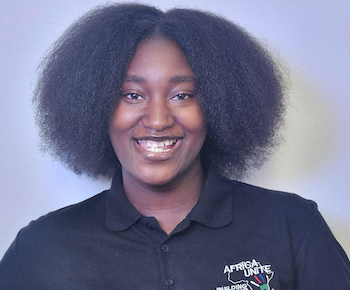
Thumbnail: Marie-Claire Tshizala is a facilitator at Africa Unite, an organisation dedicated to promoting human rights and fostering social cohesion. Tshizala’s work has its own challenges, including emotional stress, criticism, misunderstandings, lack of adequate support, and online attacks. But she is not deterred.
Profile: Marie-Claire Tshizala fled the Democratic Republic of Congo in 2007 with her mother and baby brother when war broke out in the eastern part of that country. She was only four years old.
It is because of this background that Tshizala developed an interest to work with young immigrants: “I am passionate about working with young people—'people on the move’, as I prefer to call individuals like myself—who fall under the asylum, refugees and migrant community, and vulnerable communities.”
In South Africa, Tshizala experienced first-hand discrimination against immigrants: “What inspired me to do community and human rights work is seeing many people struggle with discrimination, lack of opportunities, and not having spaces where their voices can be heard. I believe every person deserves dignity, respect, safety, and equal opportunities, regardless of their background. This inspired me to become active in community work and advocacy.”
In 2021, Tshizala joined Africa Unite as a Peer Educator and rose through the ranks to the position of Programme Facilitator. Since then, she has been involved with a variety of programmes and events focused on youth empowerment, social cohesion, community dialogues, leadership development, and migrant and refugee support. As she says, “Through my work, I help create safe spaces where young people can share their experiences, discuss challenges affecting their communities, and learn how to become active citizens and leaders. I also support awareness campaigns and storytelling initiatives that promote human rights and community unity.”
South Africa’s asylum system has excluded many people from enjoying a decent life. In its 2025 Directive, Home Affairs acknowledged that they have a backlog to process permits for immigrants, thereby making people on the move vulnerable.
Tshizala’s work demands a lot of commitment; she dedicates time, energy, and personal finances to achieve her goal of helping people in need, many of them recovering from war, poverty, and persecution. “Community work can also be emotionally demanding because many people come with painful experiences and difficult situations,” said Tshizala. She herself is exposed to emotional stress and cyber-attacks. “Working on sensitive issues such as migration, inequality, and social justice can also be difficult because not everyone supports this work,” said Tshizala.
Despite the challenges, Tshizala is determined to continue her work. In fact, “These challenges motivate me to continue standing for justice, inclusion, and the protection of human rights in our communities. . . . If I can transform or change one person’s life, then I have done the world a favour, because that one person can go on to impact and inspire others. Change always starts with one person, and the ripple effect can reach an entire community.”