Sophia Jolene Scholtz Kearney
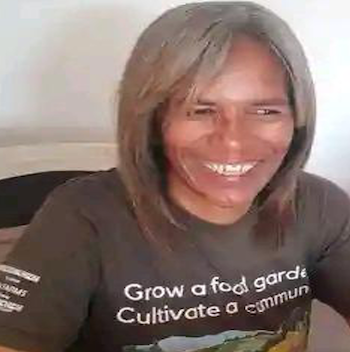
Thumbnail: Sophia Jolene Scholtz Kearney mobilises members of her Cape Flats, South Africa, community to support victims of gender-based violence and to fight crime. In 2023, Kearney formed Switch on Become Unstoppable. She uses her own savings to support her activism. By challenging gangsters, she puts her life and that of her family at risk.
Profile: Sophia Jolene Scholtz Kearney’s former boyfriend was abusive. When Kearney realised the impact abuse has on a victim’s life, she committed her life to helping others.
Kearney’s leadership started when she was very young. “Since my days at school,” she says, “I always wanted to lead. Whether it was sports, debate, or just play with friends, I wanted to be in the front line. When something went wrong, I always looked for a solution to solve it.”
In 2023 Kearney formed Switch on Become Unstoppable to address growing challenges of domestic violence—particularly gender-based violence—homelessness, child marriages, and food insecurity. Informed by cases of growing poverty and starvation among many households in South Africa—according to recent studies, 63.5% of people in South Africa experience food insecurity, with 17.5% experiencing the most chronic form of food insecurity—Kearney joined hands with others to champion food sovereignty in her community by helping to establish community gardens. Furthermore, she helped to pressure the South African government to move from a corporate-based approach to food security to a people-centred approach.
“We devised a system where major retailers would put a container inside the shop so that customers would donate food if they have extra money. The shops would then work with local communities to provide this food to families in need,” said Kearney.
Kearney continually spreads her messages on various subjects: “Throughout the year, I run many workshops on reproductive health education, gender-based violence issues, and food sovereignty.” She has also partnered with Home of Independence, a local organisation working with marginalised groups to assist undocumented locals with identification documents and follow-ups for those on housing lists: “We have assisted dozens of people to get their identification documents and brought those on housing list to the attention of authorities.”
Kearney provides referral support to victims of gender-based violence in her community: “We do referrals to centers that offer protection to victims of gender-based violence . . .. For foster children, we refer them to the Place of Hope in Parow. For young boys waiting trial, we refer them to Bosaza for counselling.”
In December 2025, South Africa declared gender-based violence a national disaster.
There are dangers involved with Kearney’s work. “I often mobilise members of the community to support victims of crime at court,” she explains. “This puts me and my family in danger. . . . This has put me at risk of gangsters who often want to fix me and my family. The house that I had given to my son was taken by gangsters.”
There are financial risks as well. Kearney’s organisation is not funded. She sacrifices her time and meagre resources for community work, including transportation for her and her fellow activists to attend community development programmes.
Kearney believes that the stigma she has faced because of her past helps her to empathize with others who have had similar experiences: “I got healing from this work as a victim of gender-based violence. I know the power of my work. I want others to benefit as well. I want to take others by the hand and let them realise that there is life after abuse.”